Build RAG Systems
That Ship

From Zero to Mastery

Learn the principles of designing and shipping enterprise-grade RAG systems

6 Weeks with Shivani Virdi:

  • Understand production RAG architecture and evaluation in depth
  • Develop replicable frameworks for building AI systems that ship
  • Build complete RAG pipeline from scratch to deployment
  • Future-proof your engineering career

Trusted by 74,000+ engineers on LinkedIn

RAG — The AI System Design Skill You Can't Ignore

RAG isn't a feature. It's a fundamental system design pattern. The retrieval layer underneath every production AI system.

RAG is everywhere.

Why This Course Exists

Tutorials show you the 10%. Production is the other 90%.

Doubly Stochastic

Randomness at every layer.

Retrieval is probabilistic. Generation is probabilistic. You're building deterministic product behavior on top of two layers of randomness.

Four Disciplines

No single background prepares you.

Data science, NLP, system design, and ops together build a RAG system. It's an amalgamation of four disciplines—no single engineering background covers it.

Hyperparameter Hell

Every choice creates lock-in.

Chunk size. Embedding model. Retrieval strategy. Reranker choice. Each decision shapes what's possible downstream—changing any means re-indexing, re-evaluating, re-tuning.

Evaluation Gap

Harder than building the system.

You need ground truth to evaluate. You need a working system to create ground truth. It's a chicken and egg problem with no easy way out.

Data-First System

Your data shapes your pipeline.

The pipeline you built is shaped by the data you built it on. New data invalidates assumptions—chunking, retrieval, prompts. Same system, different data, different results.

The CAL Triangle

Cost. Accuracy. Latency. Pick two.

Optimize for one, the other two suffer. Every production decision is a tradeoff you need frameworks to navigate.

Why Production RAG is a Different Beast

Six challenges that separate production RAG from tutorial demos.

Most courses teach the concept. This one teaches the reality.

This is what we do differently

Four things that set this course apart from tutorials and docs.

Not code to copy-paste. Mental models for approaching any RAG problem—how to think about chunking, retrieval, evaluation. Apply to any dataset, any domain.

Frameworks That Transfer

The hardest part of RAG, and we spend an entire week on it. Synthetic test sets, LLM-as-judge, bootstrapped golden datasets. You'll finally be able to answer: "Is my system actually getting better?"

Evaluation Mastery

You'll build a system from 70% to 90%+ accuracy. Not a polished demo—the actual iterations, the failed experiments, the techniques that moved the needle.

The Full Accuracy Journey

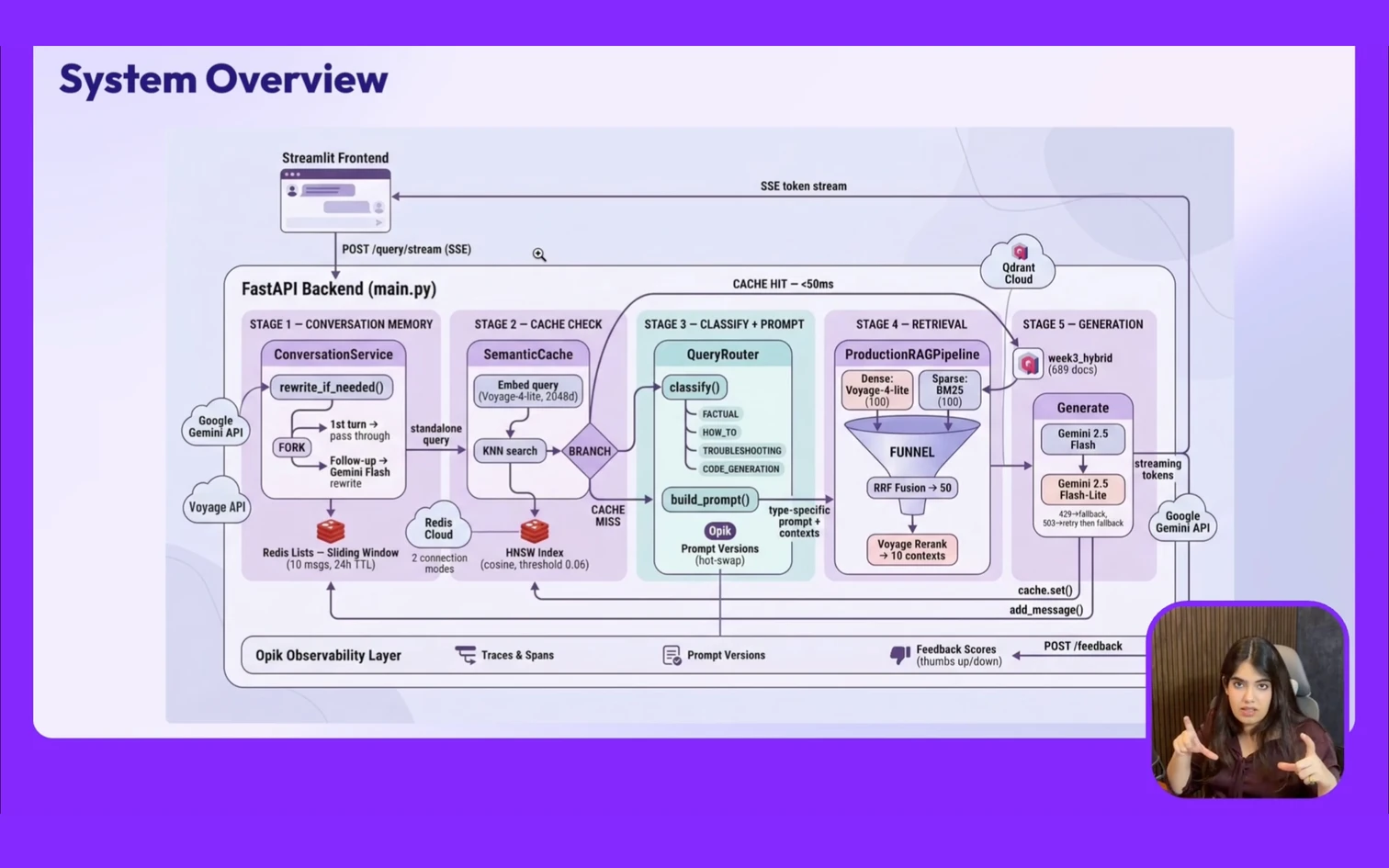
Semantic caching. Streaming API. Observability. Deployment. The infrastructure that takes a working prototype to a system that handles real users.

Built for Production
Shivani Virdi
Microsoft AWS Adobe
Trusted by 74,000+ engineers

Shivani Virdi

Shivani is an AI Engineer who builds production-grade AI systems and teaches teams to do the same. She has 5+ years of experience shipping software across Microsoft, AWS, and Adobe for products serving millions of users, systems with massive attack surfaces where failure isn't an option. She founded NeoSage to fix what's broken in AI education, the gap between tutorials, research, and reality, and built a community of 74,000+ engineers learning to bridge that gap.

A Note from Shivani

"When I started my AI journey, I thought my software engineering experience would translate directly. It didn't. I had to unlearn, relearn, and build new mental models from scratch. The frameworks I teach in this course are the ones I wish someone had handed me on day one. They would have saved me a year of frustration and a lot of broken systems.

I've since trained Principal Engineers, PMs, and senior leadership at my org at MS on production RAG. After delivering that cohort, the one thing that stuck with me and motivated me to bring this accelerator out is realizing that even the most experienced professionals in the field are facing the exact same gap. Once they had the right frameworks, they moved fast. That's what this course gives you. Not just concept and code, but the right mental models to actually ship."

Know Before You Commit

This accelerator is for the software engineer who knows they need to upskill in AI and is ready for a real, production-focused path.

  • You're a software engineer who has shipped code to production.You build things for the real world.
  • You're feeling the pressure to master AI.But you're tired of sifting through scattered blog posts and oversimplified tutorials.
  • You've tried RAG tutorials that show concepts.But they don't explain why, where, or how they'll fail.
  • You want frameworks that are repeatable and production-tested.Not just one-off code snippets that work on a single clean dataset.
  • Your goal is to confidently build, evaluate, and ship AI systems.And transition your career toward being an AI Engineer.
  • You're brand new to coding.We move quickly and assume you're comfortable writing and debugging code.
  • You haven't worked on a professional codebase yet.Much of what we teach is about production constraints—messy data, real users, cost/latency tradeoffs.
  • You've already built and shipped production RAG systems.This is an upskilling accelerator for engineers transitioning into AI.
  • You're looking for a passive learning experience.This is hands-on, project-based work.

You just need two things to succeed in this accelerator:

Professional Coding Experience

Languages don't matter as much as experience, but you should be comfortable with Python.

Basic System Design

You've been part of the process of shipping and maintaining a production application.

What You'll Learn

6 weeks of production-focused content. 45+ hours of hands-on learning.

  • LLM Fundamentals: How LLMs Are Born (Pretraining)
  • LLM Fundamentals: Post-Training, Limitations, and Hallucinations
  • The RAG Paradigm: Architecture and Core Components
  • Framework: How to Identify, Qualify, and Define Your RAG Project
  • Setting Up Your Production Stack: Qdrant, Haystack, and Gemini
  • Hands-On: Building Your First End-to-End RAG Pipeline
  • Testing and Debugging Your Initial Queries

  • Why Chunking Is Your Most Important Decision
  • Embeddings Deep Dive: How Text Becomes Vectors
  • A Deep Dive into Different Chunking Strategies
  • Content-Aware Chunking: AST-based (Code) and Semantic Approaches
  • Introduction to RAG Evaluation: LLM-as-a-Judge & Human Review
  • Hands-On: Systematically Comparing Strategies to Find a Winner

  • Vector Database Internals: How HNSW and ANN Algorithms Work
  • Dense vs. Sparse Retrieval: Solving the Coverage Problem
  • Implementing Hybrid Retrieval with Reciprocal Rank Fusion (RRF)
  • Reranking Architectures: Bi-encoders vs. Cross-encoders (Voyage AI)
  • The Two-Stage Retrieval Pipeline: LLM Routing for Precision
  • Lab: Building and Evaluating Your High-Accuracy Retrieval System
  • Analyzing Tradeoffs: Cost-Accuracy-Latency (CAL) Framework
  • Learning from Failure: Metadata Filtering Strategies
  • Framework: Optimizing Data for Targeted Retrieval

  • The RAG Evaluation Challenge: Why It's Harder Than Building
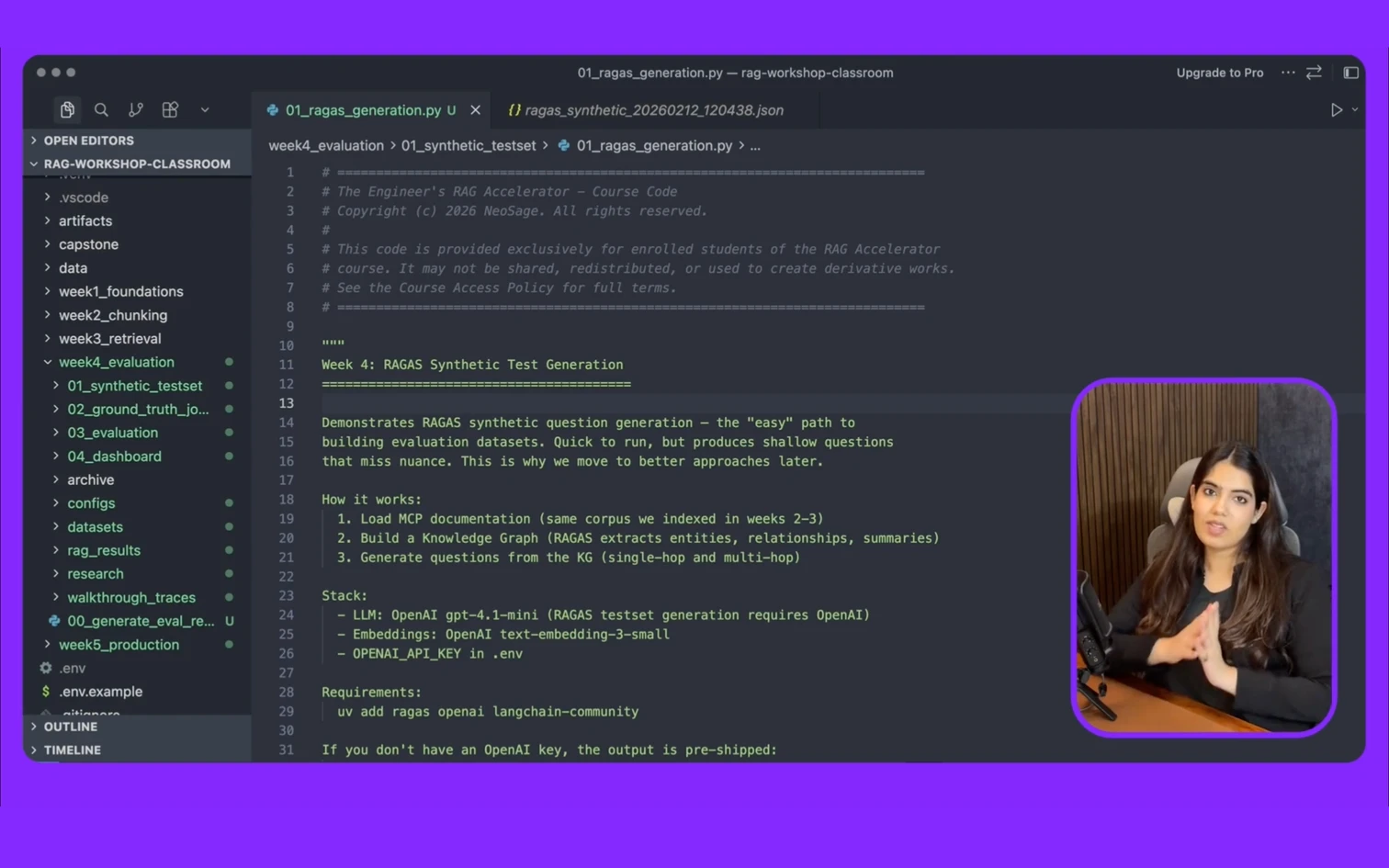
  • Synthetic Test Set Generation with RAGAS
  • LLM-as-a-Judge Evaluation with DeepEval
  • Semantic Metrics for Context Quality: Understanding Misalignment
  • Comparative Analysis: Forcing Differentiation in LLM-Based Evaluation
  • Bootstrapped Golden Datasets: Creating High-Quality Ground Truth
  • Framework: Choosing the Right Ground Truth Strategy for Each RAG Iteration

  • Production RAG Architecture: Latency, Cost, and Observability
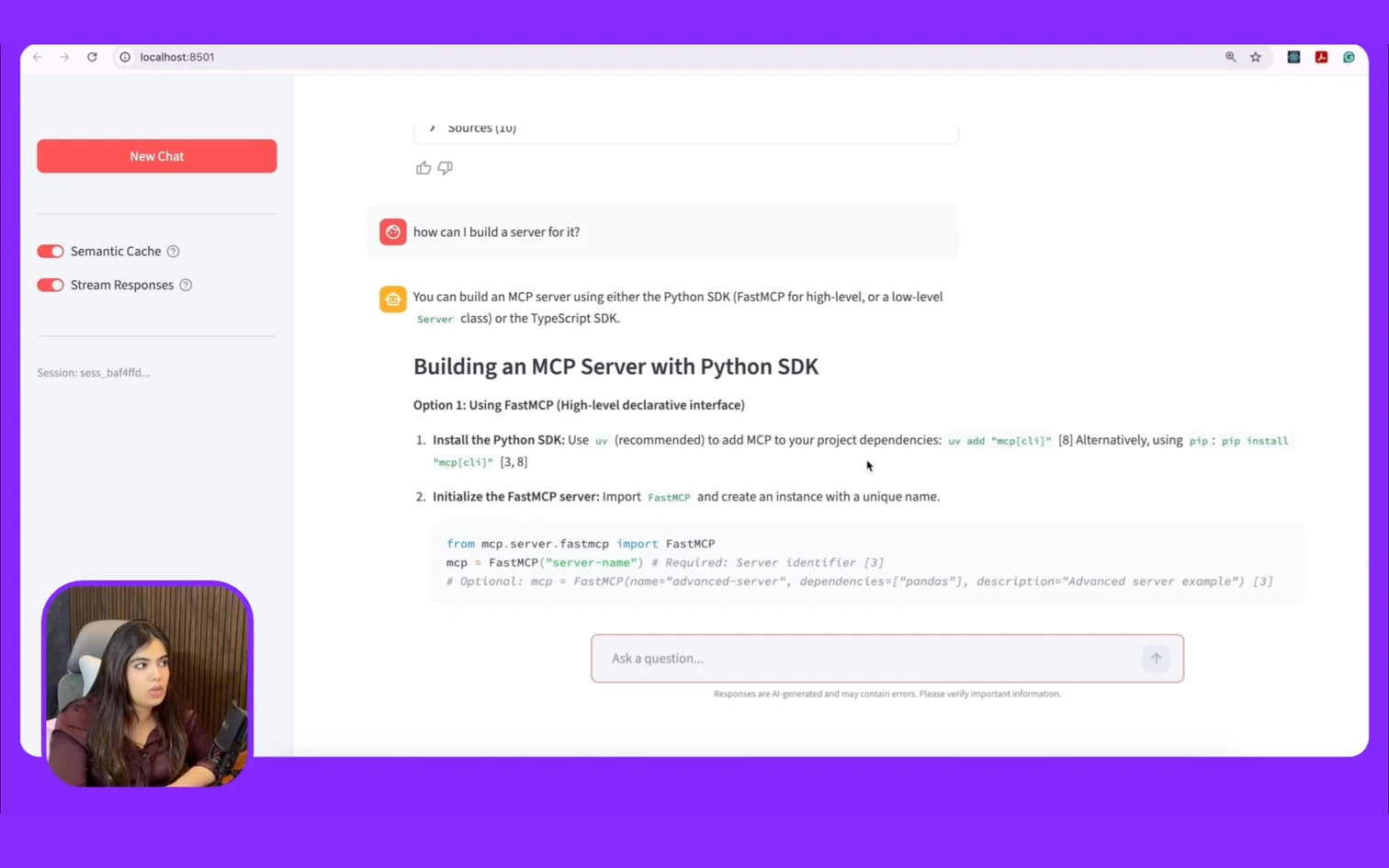
  • Semantic Caching Deep Dive: Achieving 1250x Speedup with Redis
  • Building a Production Backend with FastAPI and Streaming Responses
  • Developing a Chatbot UI with Streamlit
  • Integrating Opik for RAG Observability and Tracing
  • Smart Retries, Adaptive Prompting, and Cache Invalidation Strategies

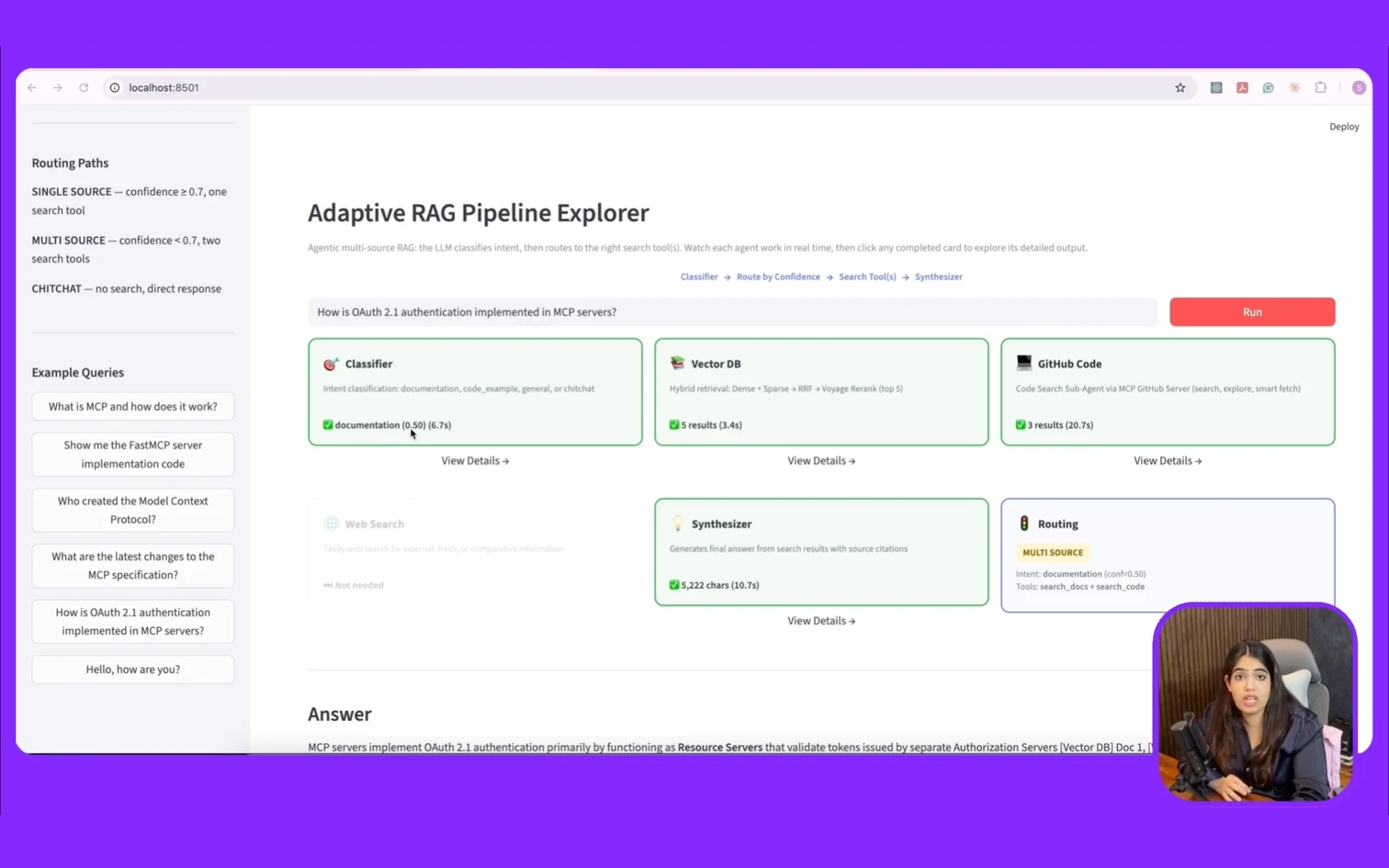
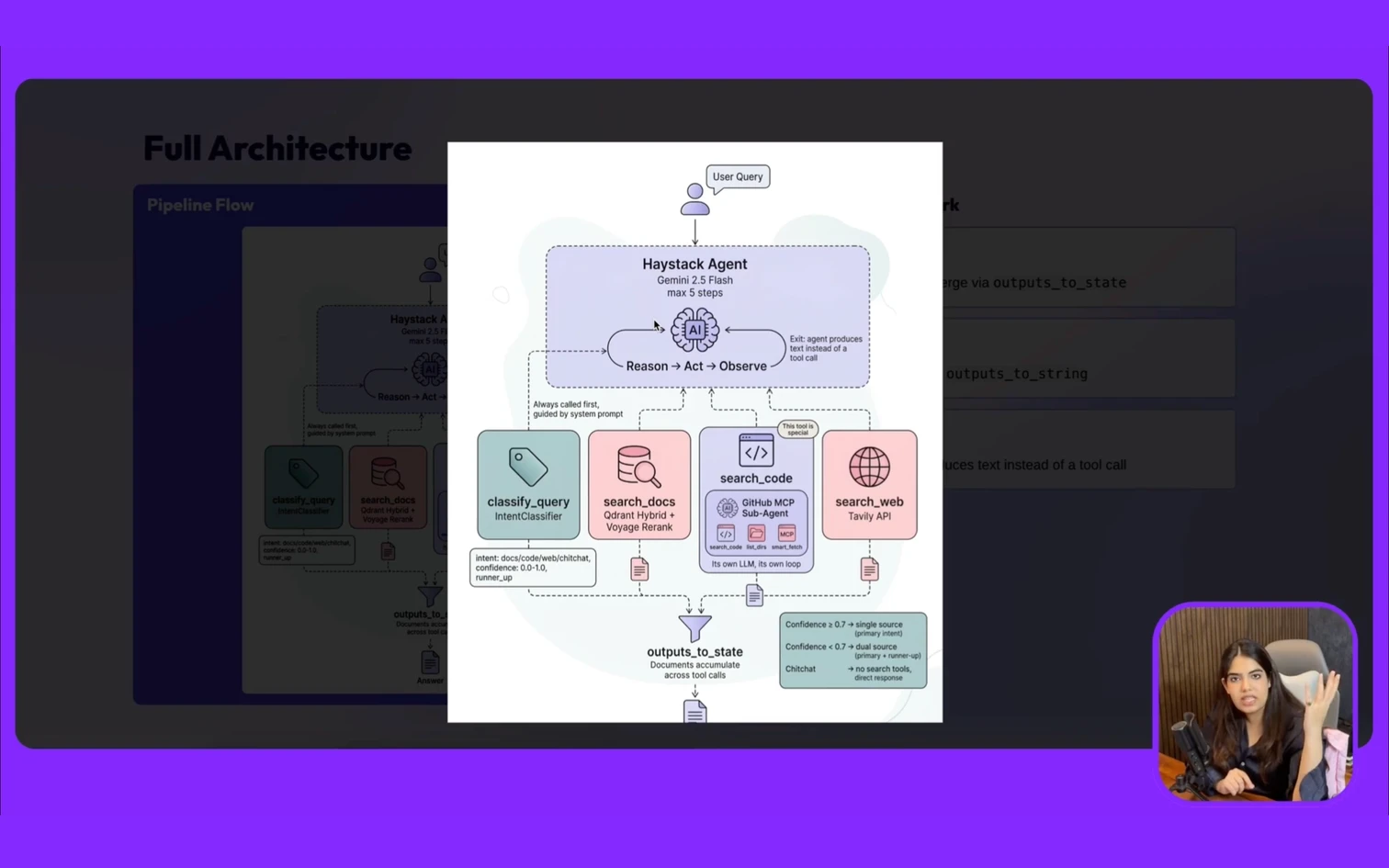
  • Beyond RAG: Cache Augmented Generation (CAG) and Agentic Architectures
  • Advanced Query Understanding: Expansion, Decomposition, and Multi-Step RAG
  • Hybrid Retrieval: Knowledge Graphs, Code Search, and Multi-modal Data
  • Dynamic Retrieval: Query Routing and RAG-as-a-Pluggable-Tool
  • Production Deployment: Docker, Cloud Platforms, and Security Best Practices
  • The CAP Theorem for LLMs: Understanding Tradeoffs (Cost, Accuracy, Latency)
  • Capstone Project: Design, Build, and Deploy Your Own Production RAG System

How It Works

Self-paced curriculum that fits your schedule. Live support when you need it.

Self-Paced Recorded Curriculum

Six weeks of production-focused lessons. Learn at your own pace, on your own schedule. All labs are in Python scripts, runnable and production-ready.

Weekly 1-Hour Live Office Hours

Get your questions answered, debug issues, and get unstuck. All sessions are recorded if you can't attend.

Daily Cohort Chat Support

1 hour of live support every weekday in our private community channel. Plus ongoing peer collaboration.

Completion Certificate

A formal certificate recognizing your achievement, suitable for L&D budgets and professional development.

Lifetime Access

Retain access to all course materials, recordings, and future updates forever.

6-8 Hours Per Week

Build real systems alongside your full-time job. Designed to fit your busy schedule.

Your Career Can't Afford to Wait

According to a 2024 analysis of over 20 million job postings, traditional software roles are in decline with backend roles down 14% and frontend roles down 24%. Meanwhile, AI Engineer roles have exploded by 143%.

AI engineers earn an average of $245,000/year in the US, with premiums up to 18.7% over non-AI engineers at staff level.

What's Included:

  • 45+ hours of hands-on Production Grade RAG insights
  • Industry-level AI tech stack: Haystack, Qdrant, Gemini API, Redis, FastAPI, Streamlit, Opik
  • Production-ready code templates and frameworks
  • Evaluation frameworks (RAGAS, DeepEval)
  • Production AI system design principles and mental models
  • A portfolio-ready capstone RAG project
  • Weekly 1-hour live office hours
  • Daily cohort chat support (1 hour every weekday)
Cohort 1: Founding Members
$799 Standard Price
$299 Cohort 1 Price
$000 Early Bird · First 10 Spots
  • Lifetime Access
  • 50 Total Seats
  • Certificate Included
  • L&D Budget Friendly

    Join 12-hour early access on Jan 9th

    Frequently Asked Questions

    The first cohort begins the last week of January 2026. The exact start date will be announced on this page at launch on January 9th.

    The core curriculum is self-paced and recorded, so you can learn on your own schedule. We also provide weekly 1-hour live office hours and daily 1-hour live chat support (weekdays) for real-time help.

    Plan for 6-8 hours per week. The self-paced format lets you fit this around your full-time job.

    No problem. You have lifetime access to all course materials, recordings, and future updates. Go at your own pace—there's no pressure to rush.

    No. We start from AI fundamentals. You just need professional coding experience (comfortable with Python) and basic system design knowledge from shipping production software.

    Haystack, Qdrant, Gemini API, Redis Semantic Cache, FastAPI, Streamlit, Opik, RAGAS, and DeepEval. All industry-standard, production-grade tools.

    Yes. We teach principles and mental models, not just tools. You'll learn how to evaluate and apply these techniques to any stack.

    Please check your company's Learning & Development (L&D) policy. Most companies provide $500-$1,000+ annual L&D budgets. We'll provide a completion certificate and any documentation you need to submit your claim.

    Engineer's RAG Accelerator

    Build production RAG systems that actually scale.

    Join the accelerator and master the AI skills that command a premium. In a world of hype, be an engineer who builds different.

    • Go from RAG tutorials to production-ready systems
    • Build the skills commanding premium AI engineer salaries
    • Ship a portfolio-ready capstone project
    • Join 50 engineers in the first cohort
    Join Waitlist
    Shivani Virdi